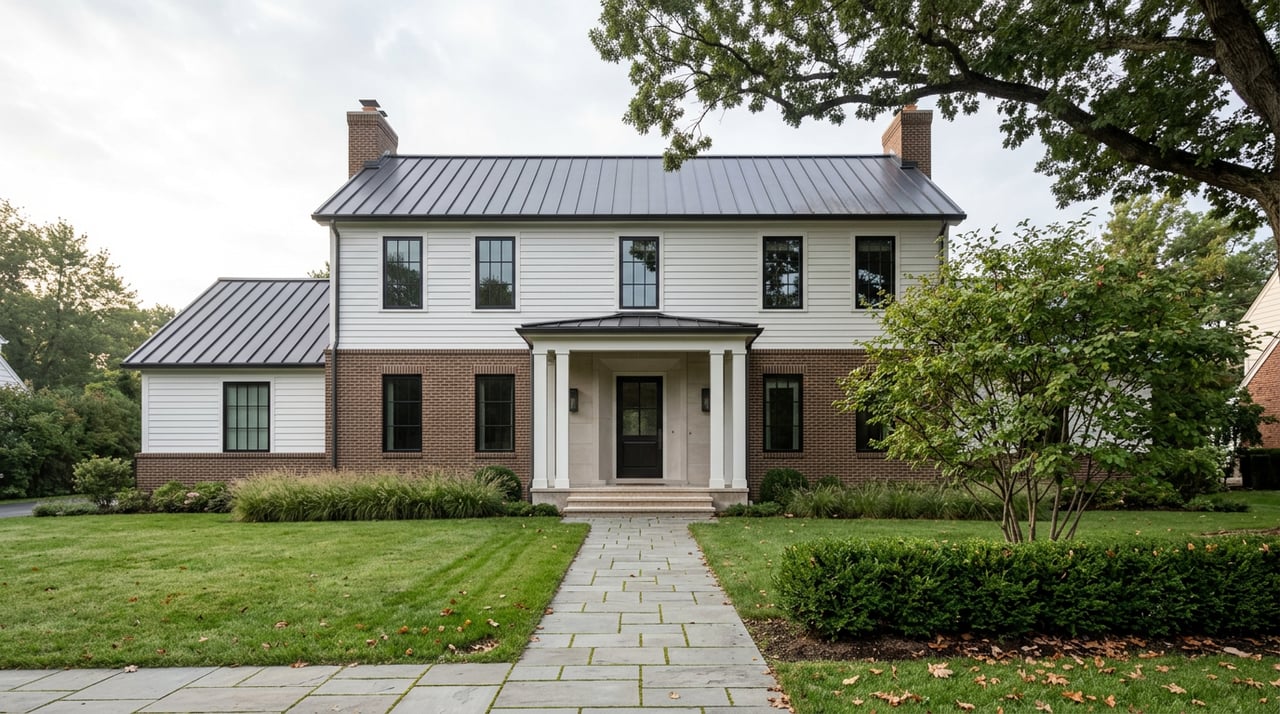
Edina's Home Prices Look Like They're Soaring. Here's What the Median Is Actually Counting
September 24, 2026
September 24, 2026
Pull up two of the biggest real estate sites and search the same city, and you'll get two different stories. In Edina, Redfin's February 2026 figure showed prices up 25 percent from a year earlier, while Zillow's September 2026 index showed a much smaller change over its trailing year. They measure different things over different periods, so neither number is wrong. And if you're comparing Edina to Minnetonka or Golden Valley based on the headline figure alone, you're comparing the wrong thing.
Here's the split. As of February 2026, Redfin reported Edina's median sale price at $788,000, a 25 percent jump from the year before, with 32 homes sold that month, down from 39 the prior February. Zillow's Home Value Index, which is built specifically to track the value of a constant, typical home rather than whatever happened to sell, put the average Edina home at $605,433, up just 0.8 percent over the trailing 12 months, as of September 2026.
| Metric | Source | Figure | Window |
|---|---|---|---|
| Median sale price | Redfin | $788,000 (+25.0% YoY) | February 2026 |
| Homes sold that month | Redfin | 32 (down from 39) | February 2026 |
| Typical home value (ZHVI) | Zillow | $605,433 (+0.8% YoY) | trailing 12 months, as of September 2026 |
That distinction matters when interpreting the gap. They're describing two different questions. Redfin's median answers "what did the homes that actually sold last month cost." Zillow's index tries to answer "what would the same house be worth today versus a year ago." Because the figures cover different windows, their gap does not by itself show that Edina suddenly got 25 percent more valuable. A changing mix of sales can also move the median.
Thirty-two closings is a small sample. Drop even one or two seven-figure estate sales into a month that thin, and the median jumps in a way it wouldn't in a market moving 80 or 100 transactions. That's simple math, not a conspiracy, but it means the headline number in a low-volume month tells you less about appreciation and more about who happened to close that month.
The deeper question is why Edina keeps producing more of those high-end closings relative to everything else. That's not random. It's baked into how the city is built.
Edina is largely built out. There isn't a meaningful supply of vacant lots waiting for construction crews. Builders serving the city describe new construction here as almost entirely teardown and rebuild, concentrated in neighborhoods like Morningside, Indian Hills, Rolling Green, and the streets around Interlachen Country Club. Construction alone on these projects typically runs $300 to $450 per square foot, and all-in project budgets, once you add the acquisition and demolition, commonly reach seven figures.
That has a direct effect on what shows up in the closed-sales column. Every time a $400,000 rambler comes down and a $1.8 million custom home goes up in its place, the city permanently loses one entry-level sale and gains one luxury sale, at the same address, on the same lot. Do that enough times across a low-inventory year, and the median moves even though most homeowners who didn't sell saw nothing close to that gain. It offers one reason a monthly sale-price median can rise faster than an index of typical home values, though these figures cover different windows and don't establish that this is what happened here.
There's a pocket of the city where that rebuild pipeline is structurally shut off, and it's worth knowing about if you're trying to make sense of price comparisons block by block. The Country Club District, platted in 1924 by Thorpe Brothers Realty and home to roughly 555 dwellings, is a locally designated Heritage Preservation District. The City of Edina says any demolition or new construction there requires a certificate of appropriateness, and homes generally cannot be torn down unless they're structurally substandard.
The city just tightened that further. The Edina City Council approved an update to the Country Club Plan of Treatment effective January 1, 2026, adding an escrow fee for Heritage Landmark properties specifically aimed at preventing what residents described in public comment as demolition by neglect, where a property is bought, left to deteriorate for years, and only slowly renovated. That's not a bureaucratic footnote. It's the city formally acknowledging that protecting these 555 homes from the same rebuild economics reshaping the rest of Edina requires more than a design review, it requires a financial deterrent.
Practically, this means the Country Club District sits outside the mechanism driving the citywide median upward. Its homes aren't feeding the luxury-rebuild pipeline that's pulling Redfin's number higher, and they're not going to show the kind of volatility a thin, teardown-heavy month produces elsewhere in the city.
This isn't just a local quirk. Zillow's own research, released in July 2026, found the broader U.S. housing market splitting in two: luxury home sales up 6.2 percent year over year in May 2026 while starter home sales fell 5.4 percent over the same period, even as starter inventory grew. CNBC covered the same data in early August 2026, framing it as a K-shaped housing market where stronger household wealth at the top keeps luxury buyers active while everyday cost pressure keeps starter buyers on the sidelines.
Edina's land scarcity and luxury-tier teardown activity offer a local reason higher-priced sales can weigh heavily on its median, but Redfin's February figure and Zillow's September index don't establish that the national pattern is playing out here. Nationally, affordability and confidence are part of the story; locally, land scarcity shapes new construction toward the luxury tier. The resemblance is a possible one: a small number of pricier transactions can pull a sale-price median away from the value of a typical owned home.
If you're comparing Edina to a neighboring suburb using the median sale price alone, you're really comparing this year's transaction mix, not the underlying value of similar homes. A buyer looking at entry-level condos near Southdale is shopping a completely different price mechanism than a buyer looking at a rebuilt estate in Rolling Green, and neither of those maps cleanly onto the citywide median.
For sellers, the practical takeaway is that pricing your own home off the headline median is a mistake in either direction. If your home sits outside the teardown-and-rebuild corridor, comparing it to $1.5 million rebuild sales will lead to an unrealistic number. If you're in the Country Club District, the relevant comparisons are other protected, character homes in that footprint, not the citywide average that's being pulled around by construction activity a few streets away.
For buyers, the useful question isn't "is Edina up 25 percent." It's "what's actually selling in the price band and the neighborhood I'm targeting, and why." A market that looks hot at the aggregate level can be flat for the exact type of home you want, and vice versa.
Does this mean Edina home values are actually flat? Not necessarily flat. Zillow's September index shows low-single-digit appreciation over its trailing 12 months, while Redfin's February median rose 25 percent year over year. Because they measure different things over different windows, those figures don't establish how much the typical home appreciated. The median measures what sold, not what every home gained.
Is the Country Club District immune to these swings? It's insulated from the specific mechanism driving the citywide median, since its homes are largely excluded from the teardown pipeline. It still moves with broader demand for historic character homes, just through a different set of comparables.
How should I compare Edina to another west-metro suburb if the median is unreliable? Ask what's actually closing in the specific price band and housing type you care about, over a longer window than a single month, rather than leaning on one headline figure from one source.
If you're trying to figure out what a specific Edina neighborhood, or a specific type of home, is actually doing right now rather than what the aggregate number suggests, that's exactly the kind of question worth a real conversation. Aaron Spiteri works these blocks closely enough to tell you which comparables actually apply to your situation. Let's Connect.
This article is general information, not legal, tax or financial advice. Consult a qualified professional about your situation.
Stay up to date on the latest real estate trends.

Real estate has never been more competitive and in a market where every dollar matters, so does the professional you choose to represent you. You deserve more than an agent. You deserve a trusted and experienced advisor, a dedicated advocate, someone who understands the market, anticipates opportunities, and protects your interests at every stage of the process. My commitment is simple: to negotiate strategically, guide you with confidence, and fight tirelessly for every last dollar on your behalf. Whether buying or selling, I am committed to delivering an exceptional experience and the strongest possible result. Proudly ranked the #1 solo agent at Lakes Sotheby’s International Realty for total sales volume in 2025.